
SERIES: More Than a Transaction • 2 of 5
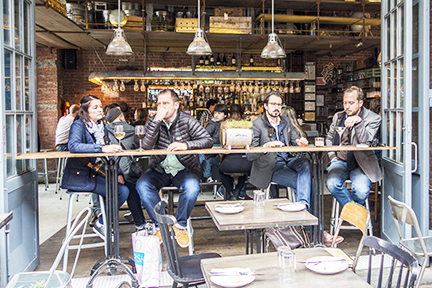
The Third Place Framework
There’s a reason people linger at your counter longer than they need to, and it’s not really about the coffee or the books or the hardware.
Sociologist Ray Oldenburg spent his career studying what he called “third places”—spaces that are neither home nor work, where community happens informally, on no one’s schedule, without anyone having to sign up. Local businesses are the primary physical infrastructure for this. They are where neighbors run into each other, where a stranger becomes a familiar face, where someone hears about a job or passes along a lead without even meaning to. That spontaneous social function is something digital networks simply can’t replicate—they lack the depth of trust and the genuine surprise that comes from being in a room together.
A 2025 study published in Choices Magazine found that counties with a higher share of third-place businesses consistently show higher social capital, with the effect even more pronounced in rural areas where alternatives are scarce. What makes these places work isn’t mystical. Oldenburg identified a few practical mechanisms. Income and occupation tend to recede inside a local diner or bookshop—people are roughly equal there in a way they aren’t elsewhere. Local intelligence flows freely: referrals, mutual aid, the kind of knowledge that never makes it onto the internet. And because trust is high, people cooperate with less friction. Agreements get made on a handshake.
When a South Dakota bookstore nearly closed, residents pooled their own money to save it — not because they needed the books, but because they needed the place.
Your business may be the third place your neighbors didn’t know they were depending on.
See you next week for the third article in this series about local businesses and why they’re important.